
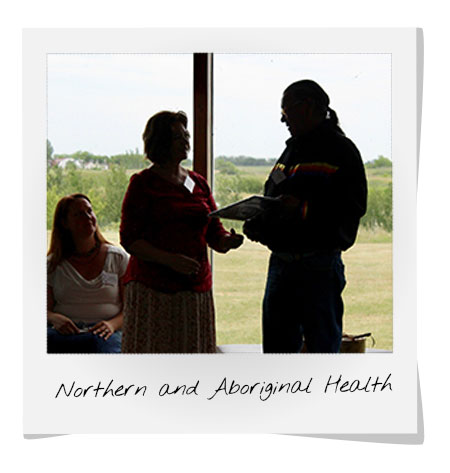

SPHERU engages in population health research – the study of social factors contributing to the well-being of various groups within the population.

Welcome to SPHERU

The Saskatchewan Population Health and Evaluation Research Unit is a bi-university health research unit based at the Universities of Regina and Saskatchewan. Since 1999, SPHERU has established itself as a leader in cutting edge population health research that not only looks at what and the why of health inequities -– but also how to address these and take action.


What’s Happening at SPHERU

Daschuk book fearless history at its finest

A new book by SPHERU’s James Daschuk is just out but already garnering rave reviews. Clearing The Plains chronicles how Old World diseases, climate and Canadian politics conspired to cause the deaths and subjugation of thousands of Aboriginal people, victims of the realization of Sir John A. Macdonald’s “National Dream.” The book is published by the University of Regina Press. Daschuk takes a look at the connections between the past and present disparities in health and well-being for First Nations peoples. In his introduction he points out that while Canada might rank highly in the UN Human Development Index, the situation for the country’s Aboriginal people is “dismal” when compared with the mainstream population. On the same index, they would rank 63rd, equal to Panama, Belarus or Malaysia. What this means is that they can expect to die between five and eight years earlier that the figure for the average Canadian. Daschuk writes, “The chasm between the health conditions of First Nations people and mainstream Canadians has existed for as long as anyone can remember; it too has become part of who we are as a nation.” The book investigates the environmental, economic and political forces that resulted in the current health crisis for Aboriginal peoples. This includes such infectious diseases as smallpox but also diseases that took hold as the 19th century wore on, such as tuberculosis, which had roots in the prolonged malnutrition of First Nations that depended on the declining bison herds as well as the new Dominion of Canada’s failure to meet treaty commitments. The advance press has been very positive: “Clearing The Plains is a tour de force that dismantles and destroys the view that Canada has a special claim to humanity in its treatment of indigenous peoples. Daschuk shows how infectious disease and state-supported starvation combined to create a creeping, relentless catastrophe that persists to the present day. The prose is gripping, the analysis is incisive, and the narrative is so chilling that it leaves its reader stunned and disturbed. For days after reading it, I was unable to shake a profound sense of sorrow. This is fearless, evidence-driven history at its finest.” – Elizabeth A. Fenn, author of Pox Americana “Required reading for all Canadians.” – Candace Savage, author of A Geography of Blood “[C]learly written, deeply researched, and properly contextualized history ... Essential reading for everyone interested in the history of indigenous North America.” –J.R. McNeill, author of Mosquito Empires Clearing The Plains (ISBN: 978-0-88977-296-0) by James Daschuk is available from the University of Regina Press. The book is currently available at the University of Regina Bookstore, the University of Saskatchewan Bookstore and McNally Robinson in Saskatoon. It will be in Chapters/Indigo on June 15.

Cell phone project provides key health info

Cell phones are a nearly ubiquitous, essential means of communication in countries such as Vietnam, as they are cheap and require little infrastructure compared with land lines. With that in mind, Dr. Nazeem Muhajarine and Dr. Lan Vu, head of Epidemiology and Biostatistics at Hanoi School of Public Health and a former student of Dr. Muhajarine’s, are heading up a project to use the technology to improve health information and health outcomes for migrant workers in the country. The project, mHealth information for migrants: A pilot project to increase health information accessibility for migrants in Vietnam, was the subject of a recent StarPhoenix article. The piece followed in the wake of the tragic factory collapse in Bangladesh that killed hundreds of garment workers. The mHealth project sets out to improve the life and health of workers that leave rural areas of Vietnam to find work in the cities such as Hanoi and Ho Chi Minh City. Between 1989 and 2009, the flow of migrant workers within the country increased from 1.3 million to 3.4 million, and could top 6 million by 2019. Many of these workers are poor and have limited access to information concerning sexual health risks and other health information. As Muhajarine told the StarPhoenix, "These are marginalized people. They're seen as outsiders and are tolerated but not welcome." Grand Challenges Canada, a federally funded organization, is providing a $100,000 grant for the mHealth for Migrants program, which uses mobile phone text messaging to provide reliable, low-cost health information to the migrant workers. The text messages cost next to nothing and can provide information about reproductive health and other issues for the female workers. The research team will track the program over eight months, and with the participation of the Vietnamese government, the hope is to expand mHealth for Migrants to more areas of the country.

SPHERU presents at Chicago aging conference

SPHERU’s work on the Healthy Aging in Place project was recently featured at an aging conference in Chicago. The American Society on Aging’s Aging in America Conference took place March 12 to 16. It represents the largest multi-disciplinary conference on aging and attracts more than 3,000 professionals. The annual conference of the American Society on Aging brings together research and best practices in the field of aging, and this year attracted luminaries such as John Beard, the World Health Organization’s Director of Ageing and Life Course. Representing SPHERU, Nuelle Novik, Juanita Bacsu and Shanthi Johnson gave a presentation, on the Healthy Aging in Place project, as well as the rationale, methods and findings. Among the findings: By 2036, seniors will reach approximately 25 per cent of the total Canadian population. Rural seniors report poorer physical health, more sedentary lifestyles, higher occurrences of functional disability, more chronic illnesses, less use of preventative health services and greater mental health challenges. They often face disadvantages such as lower incomes, education, housing, public transportation and health services. As one of the participants put it, “We’re lucky as long as we can drive….We’re a little too remote, we’re away from hospitals. And for emergencies, a half hour is a long time when somebody is dying.” Falls and loss of mobility can affect seniors’ isolation, especially as 85 per cent of seniors’ injuries requiring hospital care come from falls. For the pilot project in 2009-2010, the SPHERU team conducted 42 interviews with seniors in the communities of Preeceville and Watrous, interviews with 40 seniors in Watrous and Wollesley for the current study. Over five days, the ASA Aging in America Conference featured more than 500 workshops, four general sessions, 140 poster sessions, as well as networking events and exhibits.    

Aboriginal health presentation now online

A PowerPoint presentation by SPHERU researcher Sarah Oosman about Aboriginal health to the University of Saskatchewan’s College of Nursing is now available on our website. “Aboriginal Healthy Research and Community Engagement” can be found as part of the Healthy Aging in Place team grant project’s related documents. Click the link for the project's PowerPoint from April 4, 2013. The presentation covers a brief overview of the social determinants of health and their role in various health inequities and challenges among the Aboriginal population, followed by a discussion on the community engagement process using participatory action research methodology in partnership with a northern Métis community.

Johnson presents work on seniors’ falls

Dr. Shanthi Johnson of SPHERU will be giving a presentation this month on unintentional falls, one of the leading causes of mortality and morbidity among frail older adults. It will be available to people at both universities in the province. Making a Case for Falls Prevention in Seniors will take place starting at noon on March 22 in Regina at JSGS Window Room, 2nd Floor, Gallery Building, University of Regina, College Avenue Campus. It will also video-conferenced to Saskatoon audience in the Prairie Room, Diefenbaker Building, 101 Diefenbaker Place, University of Saskatchewan campus. For more information about the event or how to register, follow the link to our Conferences and Events page.

DeSantis featured in The Philanthropist

Dr. Gloria DeSantis’s article, “Voluntary Social Service Organizations Working on the Determinants of Health: Cause for Concern?” is featured in the latest issue of The Philanthropist. The Philanthropist is a quarterly journal for practitioners, scholars, supporters and others engaged in the nonprofit sector. It includes articles and information about the sector's important contributions in Canada. DeSantis’s article resulted from a community-based report she wrote in 2011 in collaboration with consultant Carla Bolen Anderson and Wendy Stone of the Regina Police Service. Both the recent article and the original report focus on 37 community-based organizations in Regina working on the social determinants of health – in other words, the factors outside the healthcare system that affect health. DeSantis writes that the term “community determinants of well-being” was used to emphasize the non-medical nature of the work. Of the services offered, the most common are in the areas of social supports and community engagement activities. The typical populations in the city that these organizations most frequently serve includes young adults and people described as “discriminated” or “stigmatized.” The article outlines the methods used to conduct the survey of the community-based organizations and the 77 initiatives on which they are working. The results show the priorities for the organizations across a range of areas, such as providing social supports, encouraging social inclusion, enhancing education opportunities, ensuring early life supports, and increasing food security. As well, the article cites typical partners of these organizations as well as their sources of funding, the most prevalent of which is donations and fundraising.  This survey information is important when considering that social determinants play a crucial role in influencing health outcomes. At the same time, there are growing health inequities not only in Regina but throughout the country, and many of these organizations are facing increased demand for their services but continue to rely on donations and fundraising to deliver socio-health services. Given the precarious situation community organizations face, DeSantis suggests there is a way forward to reduce the persisting health inequities across communities – specifically, we must develop a stable, sustainable nonprofit social service sector; a coherent and explicit framework and relationships between governments and nonprofit organizations; and public policies informed by these organizations’ front-line work with communities.  

SPHERU Newsletter

Issue 8
April 2013

Using BMI data to look into past, SPHERU and Rosetown plan future

Photo Credit(s):
Northern and Aboriginal Health (Paul Hackett), Rural Health (iStock photos), Intervention Research (Colleen Hamilton), Healthy Children (Brinnameade Smith), History of Health Inequities (University of Alberta Peel Collection)